If your car breaks down during a trip abroad today, or a water pipe bursts at home and you need to call someone for repairs, but you don’t know what English words to use to address these repair professionals.
In the nuances of the English language, not all “repairmen” are called Mechanics. Depending on the object of repair and the nature of the technique, the titles differ; using the wrong one might be understood, but it drastically reduces your sense of professionalism.
Below are different English terms for various “repairmen” and their respective nuances.
1. Machines on the Road: The Orthodox Mechanic
In the realm of vehicles, Mechanic is the most common and standard title. It emphasizes the disassembly and maintenance of “moving mechanical parts” (like engines, pistons, and gears).
| English | Description |
|---|---|
| Auto Mechanic / Car Mechanic | General auto repair mechanic |
| Motorcycle Mechanic | Motorcycle repair mechanic |
| Bike Mechanic | Bicycle repair mechanic |
| Diesel Mechanic | Mechanic specializing in diesel trucks or heavy machinery |
Interestingly, if you are very familiar with a master mechanic, or if they are self-deprecating, you might use the slang term Grease monkey. It describes a mechanic who spends all day in small spaces, getting their hands covered in black grease/oil.
Be careful! Never casually use
Grease monkeywith someone you don’t know well, as it can be rude!
2. The Differences Between Mechanic vs. Technician
With technological advancements, modern cars are packed with electronic components and computer systems. At this time, the title shifts from Mechanic to Technician. Here is how to distinguish them
| English | Description |
|---|---|
| Mechanic | Focuses on hands-on disassembly of parts and turning wrenches (mechanical parts). |
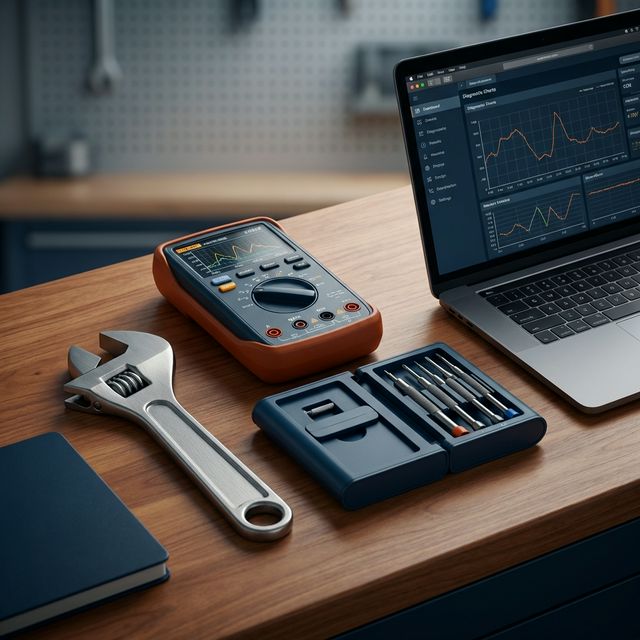
| Technician | Focuses on diagnostic data, holding a laptop or multimeter (systems and circuits). |
For example, in the IT industry, semiconductor plants, or medical equipment repairs, Technician is used almost exclusively, or even the more formal Service Engineer, because these jobs emphasize theoretical knowledge and factory authorization.
3. Who Do You Call When Things Break at Home?
The easiest place to make a mistake is in home repairs, which are usually titled according to the “licensed profession”; never simply use Mechanic just because you see something being repaired:
| English | Name | Description |
|---|---|---|
| Plumber | Plumber | Handles leaky faucets, toilets, and clogged pipes. |
| Electrician | Electrician | Repairs circuits, switchboards, and electrical outlets. |
| HVAC Technician | HVAC Technician | Repairs air conditioning and heating systems (HVAC stands for Heating, Ventilation, and Air Conditioning). |
| Locksmith | Locksmith | Specializes in door lock repairs or unlocking. |
If you are not sure which category to look for, or if you have a bunch of miscellaneous chores at home (touch-up painting, changing light bulbs, fixing latches) that you want to fix all at once, you can look for a Handyman. They are like an all-around master; although they may not have a top-tier license for a specific field, they can handle all kinds of major and minor home repairs.
4. Artisans for Specific Materials: They Have Exclusive Names
When the object of repair is no longer complex machinery, but an item with a clear “craftsmanship” flavor, the English language breaks away from the technician framework and switches to words with an artisanal feel:
| English | Name | Description |
|---|---|---|
| Cobbler | Cobbler | Master who specializes in repairing soles and replacing heels. |
| Carpenter | Carpenter | Repairs door frames, cabinets, or wooden furniture. |
| Watchmaker | Watchmaker | Responsible for the precision repair of extremely tiny parts (such as high-end mechanical watches). |
| Upholsterer | Upholsterer / Sofa Repair | Specializes in restoring sofa leather or replacing fabric. |
These words reflect a respect for “craftsmanship”. If you take a pair of expensive leather boots to seek repairs, calling the person a Cobbler will make them think you are a true connoisseur!
Conclusion: The Core Concept is “Finding the Right Person”
Recognizing whether the item you need to fix is a “machine”, “system”, or “craft/artisan item” will allow you to find the most accurate corresponding word.
If you really can’t remember these technical terms! You can use “Repair shop” as a versatile ending, for example:
| English | Meaning |
|---|---|
| I need a shoe repair shop. | I need to find a shoe repair shop |
| Is there a watch repair shop? | Is there a watch repair shop? |
Alternatively, at a car repair shop, politely address the person as “Sir” and ask “Is the mechanic available?”, and the professional master will enthusiastically help solve your problem!