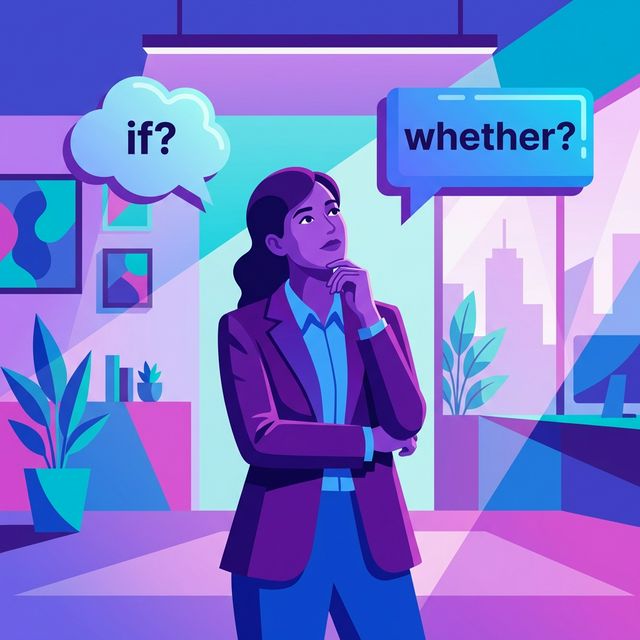
Many people directly translate 'if' as a conditional word, but when used in the middle of a sentence, it often means 'whether'. This article will teach you how to distinguish between 'if' and 'whether', and share the most authentic usages in both the workplace and daily life.
Car broke down abroad or need home repairs? Don't just say 'Mechanic'! Learn how to distinguish between Mechanic, Technician, Cobbler, Plumber, and other repair professionals in English.
Just the difference between the prepositions On and In, but the nuance is vastly different! One is a heavy stone on your heart (worry, burden), the other is a private cinema in your head (imagination, memory).
Do you find it hard to distinguish between 'Brave' and 'Courage' since both are translated as 'Brave'? This article breaks down the difference from the perspective of 'instant reflex' vs 'inner choice', and explains 6 common English words for bravery including Brave, Courage, Fearless, etc.
Understand the difference between Past Simple (Did) and Past Perfect (Had)! Let's use the Raohe Night Market scenario to distinguish between "CCTV Perspective" and "Movie Plot Perspective" and master the most confusing timeline issues in English grammar.
In Chinese, when we say 'He always...', we rarely distinguish the tense. But in English, using 'Was always' or 'Had always' incorrectly might make the other person think you are 'complaining' about him, or just 'telling a story'! These two tenses hide completely different emotional colors.
Are 'Does it get better?' and 'Is it getting better?' the same? What is the difference? In what situations should they be used?